

Jan23
READ THE POST







This post is sponsored by Tria. All opinions and personal experiences are mine.
Tria’s Black Friday sale starts Monday, November 9, 2026, and my code TERILYN gets you 20% off the Hair Removal Laser. It’s their biggest sale of the year, so this is the time to buy.
Years ago I paid for professional laser hair removal. One area cost $1,500. And it worked — for a long time, it really did. But “a long time” is not the same as forever, and at some point I was back to shaving every few days like nothing had happened. My underarms especially. If you looked at them today, you would not guess I ever had laser done there.
I’ve been shaving my underarms ever since, and I now get my bikini line waxed. I never went back to the clinic because I could not stomach paying that again for a touch-up.
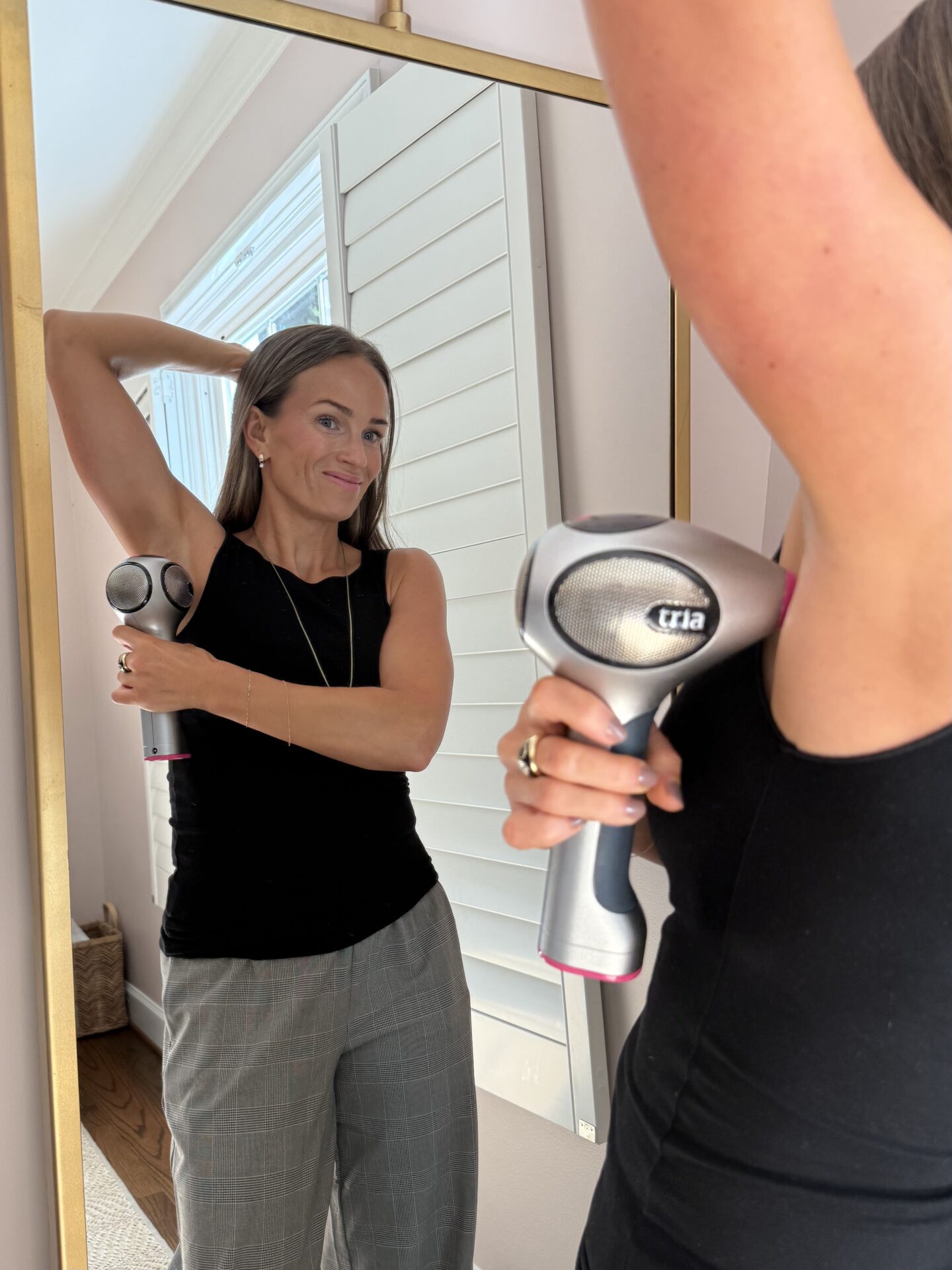
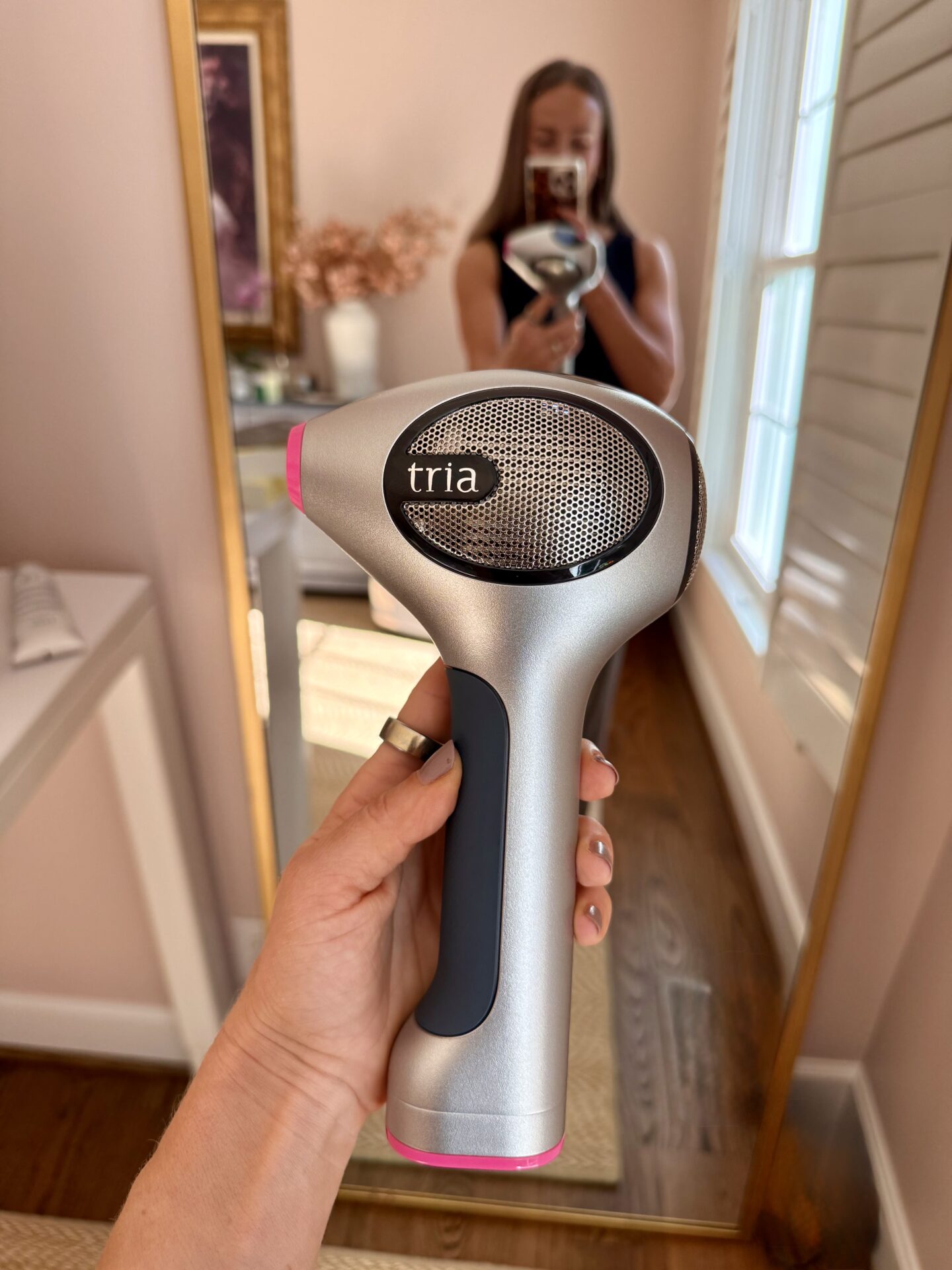
So when Tria asked me to test the 4X, their at-home hair removal laser, I said yes to save time and money. I wanted to know if a $600 device could do the touch-up work I’d otherwise pay a clinic thousands for. I’m two treatments in on my underarms, and I’ll keep updating this post as I go.
I didn’t know much about at-home lasers, but there is quite a wide range, both in what they can do and how much they cost.
Most at-home devices you see (e.g. Braun Silk-Expert, Philips Lumea, Ulike, Nood, Kenzzi) are IPL, which stands for intense pulsed light, and cost between $150 and $500.
But IPL is not a laser, so you can’t really compare it to the Tria. IPL is a flash lamp – think of it as a very strong camera flash, that throws a broad burst of light across a wide range of wavelengths. It does work, especially on small areas with dark hair, but because the light is spread out instead of focused, less energy reaches the follicle. That’s why IPL devices generally need more sessions to get results. It’s also why they feel like a warm flash rather than a sting.
The Tria 4X is a diode laser. It has one wavelength, 810 nanometers, which is the same type of laser a lot of clinics use for hair removal. Instead of a visible flash, it’s a single focused beam so you’ll just hear a beep and feel a snap.
How hair removal works is essentially the same, whether it’s laser or IPL. The light is absorbed by the pigment in the hair, and the light travels down the shaft, heating the follicle enough to damage it. A damaged follicle grows hair back slower, the hairs themselves get finer, and eventually, hair stops growing at all. That’s also why hair pigment matters so much (next section) – the laser needs dark hair against lighter skin to find its target.
I tested it on my underarms, because that’s where my professional laser wore off the most.
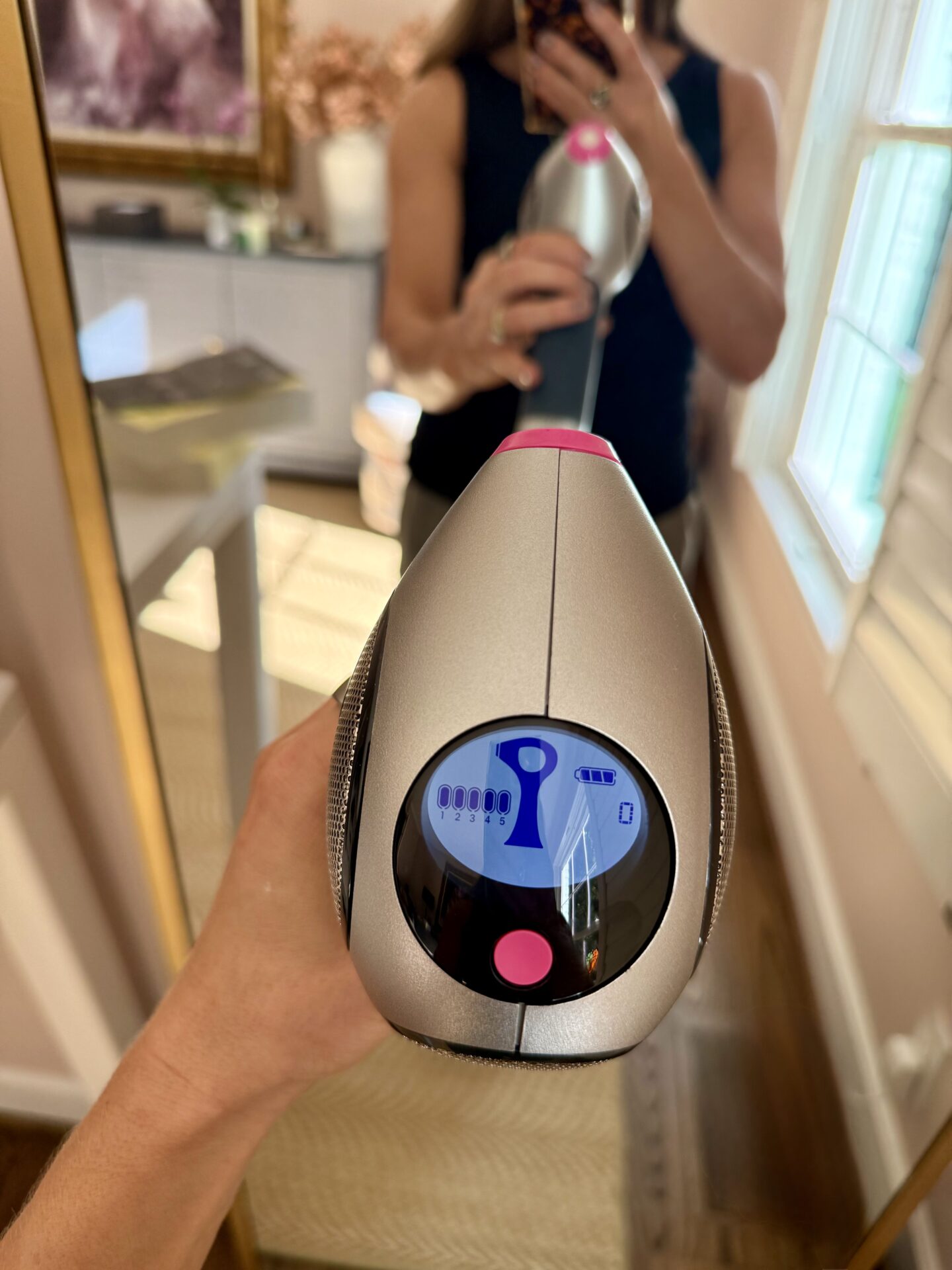
For both underarms, it takes me about 5 minutes. The first time I used it. I started at level 1 and quickly went up to level 5, and even at level 5, I barely felt anything. So, if you’re worried about pain, I don’t think you need to.
The treatment is easy. Remembering to do it every 2 weeks is the hard part, so I put it on my calendar like a workout. (Although it’s much faster than a workout. And honestly, it’s faster than a workout.)
A few more things to know about using the Tria, specifically
Laser hair removal – Tria or not – is not a good fit for everyone. And since you’ll be spending $600 on a Tria device, make sure you read this since it’s easy to miss if you’re scanning a product page. (Also, if you’re considering the Tria vs. professional laser, if these bullets indicate you’re not a candidate and a professional is still willing to do it, I think you’re wasting your money.)
It works best if you have:
Skip it if:
I’ll say first that I have a high pain tolerance (I ran the 2018 Boston Marathon in the toughest conditions on record and loved it), so take my feedback with a grain of salt.
So, does it hurt? On my underarms, no, I didn’t find it painful; it’s more… uncomfortable. It feels like having a rubber band snapped against your skin. It’s a sharp, quick sting. It’s painful in the moment, but it’s over in a second and doesn’t linger. I had some mild redness for a few hours but that’s it.
I haven’t tried it on my bikini line yet. But I know from waxing and from my doing laser in the clinic that certain areas are just more tender, so if you’re starting there, start on a lower level and work up. The gel helps if you’re sensitive by making a higher setting more tolerable.
Starting low is worth doing even if you’re not overly concerned with pain. Tria’s manual also recommends not to over-treat the same spot, which is easy to do when you’re zapping square by square and lose track. Some people mark the area with a white eyeliner pencil but I haven’t tried it. (Don’t use a dark pencil since the laser will gravitate towards that pigment.)
After two treatments, I don’t have to shave my underarms as often so it seems like regrowth is slower. Some patches also seem finer. But, I’ll have to wait to post an after photo since I still don’t think the result is noticeable enough in pictures yet – I bet it will be once hair stops growing back entirely. So stay tuned.
I paid $1,500 for a single area at a clinic. That was a full series, and it worked, but it eventually wore off. Going back for a touch-up means paying for appointments again, plus the time for the appointment (meaning time away from work and my kids).
By contrast, the Tria 4X is about $600 and I can do it at home in about 10 minutes, and I’ll have it forever to do my own touch-ups.
Professional treatments do have some pros over the Tria – one session covers more ground in less time, and clinics have lasers that work on darker skin tones. If you want full legs done, a clinic is the better choice since you’re not going to be constrained by a battery and most have larger lasers, so it’ll be a lot faster.
But if you’re doing small areas, are a candidate based on skin and hair color, and don’t want to spend thousands of dollars at a clinic, the Tria is the better way to go, especially if cost is your biggest factor.
Yes. I’m two treatments in, and I can already tell that hair is growing back slower and the hair itself is finer. I’m confident it’ll completely remove the hair once I finish my treatments.
Tria says you’ll see visible change after 2 treatments. I first noticed slower growth and reduced hair after treatment 2. The full course is 6 to 8 treatments, two weeks apart, so about three months.
It’s FDA-cleared for home use. It’s safe when you’re in the approved skin tone and hair color range, and you follow the instructions. Plus, the built-in sensor won’t unlock on skin it can’t treat.
Yes, for women’s facial hair from the cheek line down: upper lip, chin, sideburns. Don’t use it near your eyes, including eyebrows.
No. Tria says it’s for Fitzpatrick skin tones 1 through 4 only, and the device locks on darker skin.
Redness and a quick sting right after are normal. Burns can happen if you over-treat a spot or use it on tanned or sunburned skin.
$599.99 at trialaser.com as of this writing, with a one-year warranty. I paid $1,500 for one area professionally (and that was with a friends & family discount).
“Better” is subjective. It’s not stronger. A clinic laser is faster and works on more skin tones. But the Tria is best for convenience (at-home, no-appointments) on smaller areas and for touch-ups, – and way less expensive.
No. Tria’s manual says not to use it during pregnancy or while breastfeeding because it hasn’t been tested on those groups.




Leave a Comment