

Oct24
READ THE POST







I’m always surprised by the questions I get about skincare. People aren’t sure when to use them and/or in what order. Do I use it morning or night? Both? Does a serum come before or after a toner? Does a face oil go under moisturizer or on top? How do I layer serums? But, I have to remind myself that 10 years ago, I was asking myself the exact same questions, so it’s really not that intuitive, especially if you’re working on building a complete skincare routine for the first time. So, if you have no clue how to layer skincare products, know that you’re not alone!
I’ll explain the exact order to apply your skincare, whether you have a vitamin C, retinol, hyaluronic acid, or just your everyday cleanser and moisturizer. I’ll also share my personal morning and evening routines, so you can see exactly how I layer my own products.
First, here’s a quick overview, and I’ll delve deeper into each one below.
I am almost 41, and I have dry, aging skin, so I wanted to share the products I use for each step listed above (along with my complete skincare routine at the bottom of the post). If you need help choosing the right products for your skin type, join my skincare 101 newsletter. You’ll get a few emails walking you through it all, step by step.
Cleansing is obviously the first step in any skincare routine. It removes dirt, impurities, excess oil, and makeup so the rest of your products penetrate your skin instead of just sitting on top.
My cleansers:
A few tips:
I don’t usually double cleanse unless I’m wearing a lot of makeup, but I know some people swear by it. I do, however, always use a washcloth or muslin cloth to remove my cleansing balm (reviewed here) at night, and that helps clean my skin more than rinsing alone.
I highly recommend using a washcloth at night to remove your cleanser, no matter what type of cleanser you use. It provides gentle exfoliation and helps remove dirt, oil, and makeup without stripping skin.


Toners are often misunderstood and they’re the most-skipped step in most skincare routines, but they’re a game-changer when used correctly. Forget the burning astrigents of our youth. Today’s toners help balance your skin’s pH after cleansing, prep it to absorb the next steps, and balance skin’s hydration. They also make your serums work even better and since those are the priciest part of most skincare routines, you want to maximize results.
My toners:
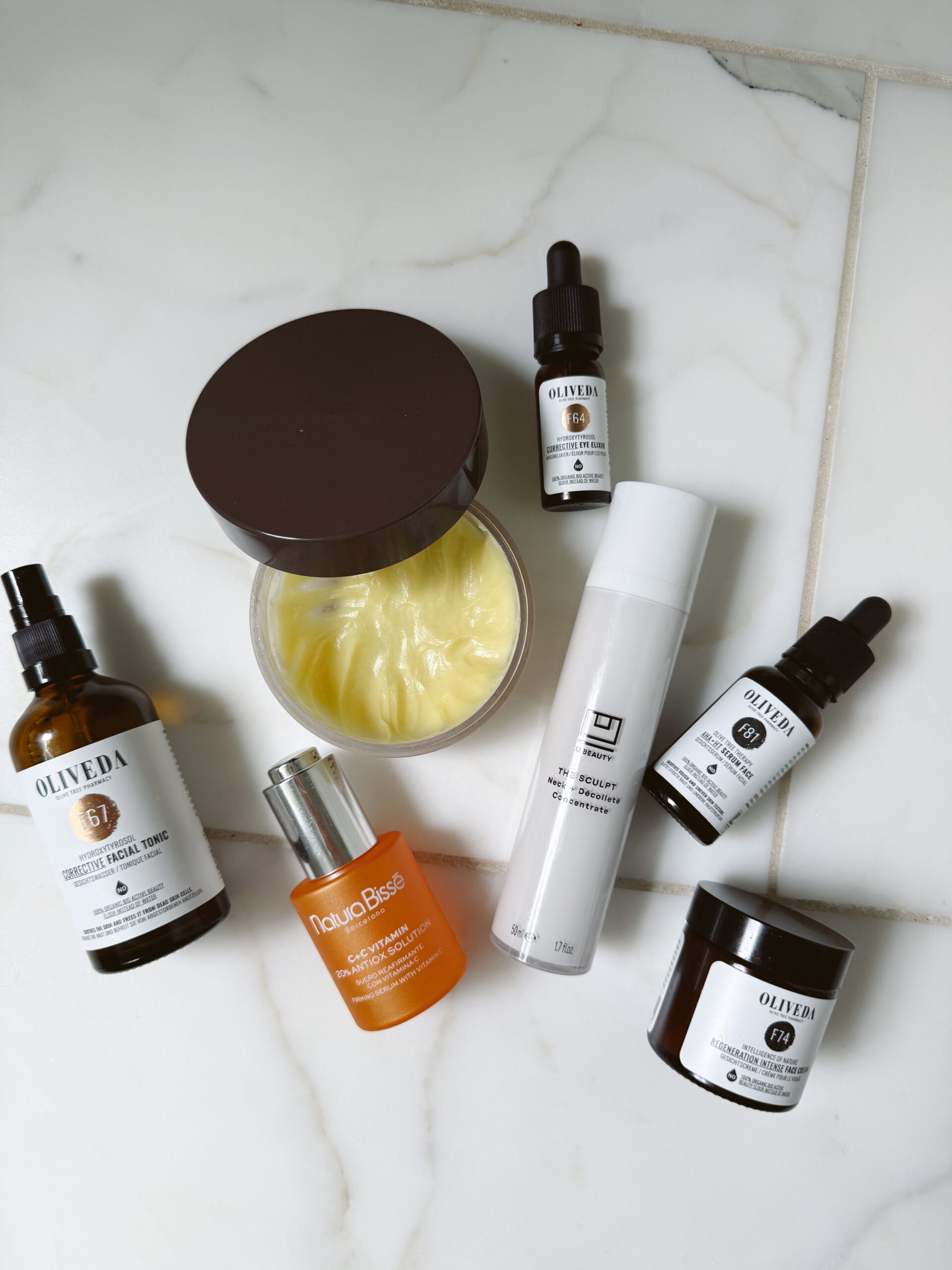
AM and PM: Oliveda CorrectiveFacial Tonic. It’s hydrating, smells amazing and lasts forever (and is one of my favorite clean skincare brands).
This is where you target specific skin concerns with active ingredients. “Treatments” can be anything from acne spot treatments to anti-aging formulas.
The terms “Treatments” and “Serums” (the next step) are similar but have a few key differences. I separated them in this post for clarity and to help you know what to use first, since many treatments are similar formulas to serums (in terms of texture, weight, etc).
Treatments are problem-solvers and not always “daily” steps. They usually contain high concentrations of active ingredients meant to target a specific issue, like acne spot treatments, AHAs, or retinol. Serums, on the other hand, are your “core” daily products. They tend to be lighter, more hydrating and can be layered and used regularly without much irritation. Think hyaluronic acid, vitamin C and peptides.
Common key actives in treatments & when to use them:
These types of products are often only used at night and only as tolerated (a few times a week), but check the label on your specific product(s) for directions, pay attention to how your skin responds, and adjust as necessary. Many treatments can be used daily once your skin adjusts over time.
My treatments
Serums are similar to treatments since they’re packed with active ingredients that penetrate deeper than moisturizers, but they’re not as strong as treatments. You can typically use them AM and/or PM.
Always apply your lightest serums first since this helps each layer absorb without being blocked or piling. Water-based serums (like hyaluronic acid or lightweight vitamin C) go before thicker, oil-based serums. If you’re using all waterless products, like Oliveda (reviewed in detail here), pay attention to the viscosity to know which product to apply first.
My Serums
AM:
1. Hyaluronic Acid – I apply this while my skin is still damp from my toner. I typically only use this in the winter since I don’t find I need it as much during the humid summer months. I also use it when visiting family in Utah, where the air is drier. I’ve tried a few brands but like the Oliveda Vegan Hyaluronic best. (Here are more tips for dry skin.)
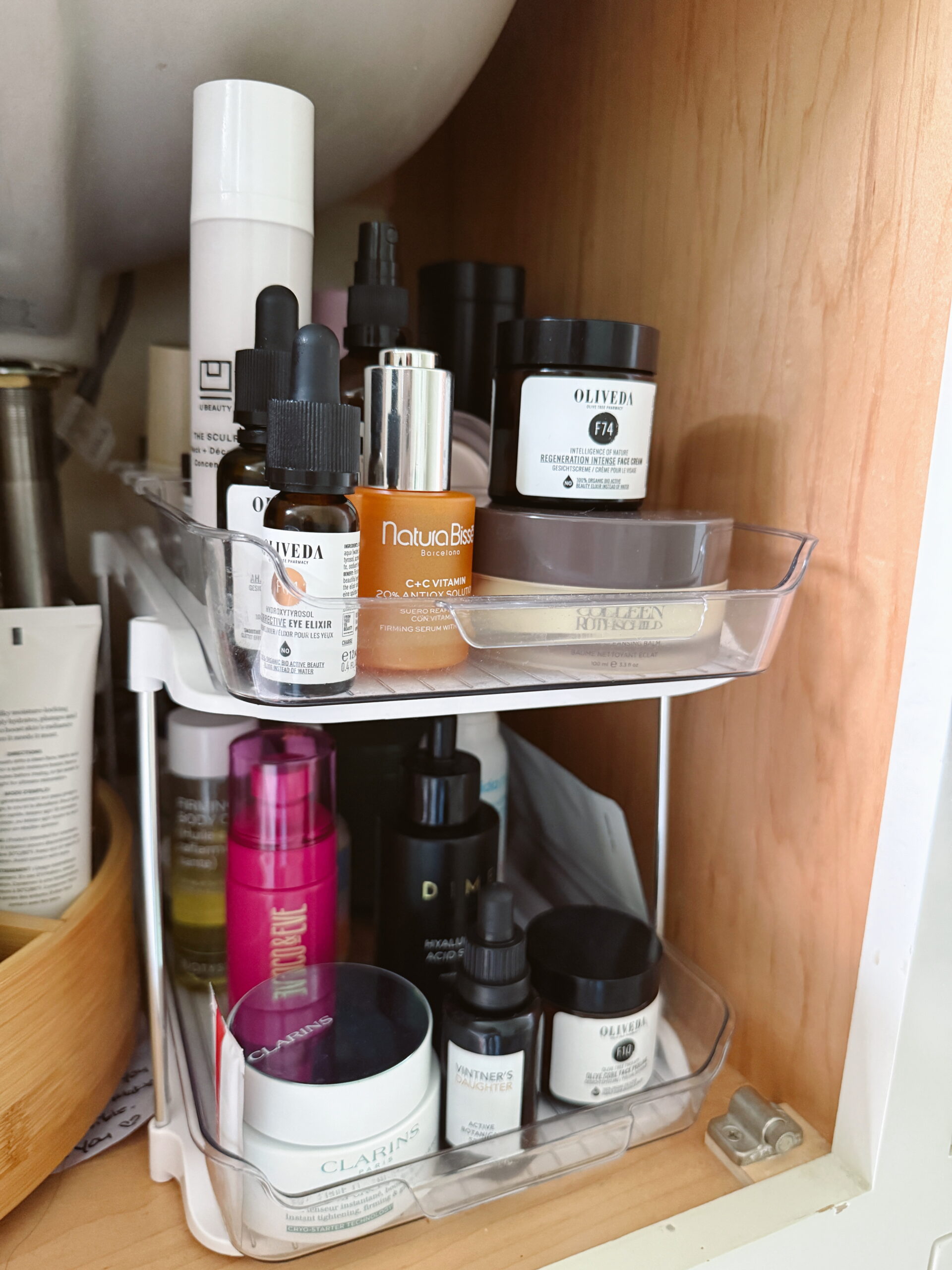
2. Vitamin C Serum – I like both Natura Bisse C+C Vitamin Antiox solution and the Oliveda Vitamin C Serum (reviewed here) for a more budget-friendly option. Dime Beauty’s Hyperglow Serum is even more affordable, but I haven’t personally tried it. (Here’s a review of the Dime Beauty products I have tried.)
3. F59 Corrective Serum + Kahai Elixir – I mix these in my hands before applying them together, since the combination helps both products penetrate deeper. F59 is the viral “botox in a bottle” (reviewed here) and the Kahai is a retinol alternative that my skin tolerates daily, although I built up to daily use. These are both pregnancy and breastfeeding-safe.
PM
1. F59 + Kahai Elixir (I skip these on the nights I use the AHA serum above).
A few notes specific to different types of serums:
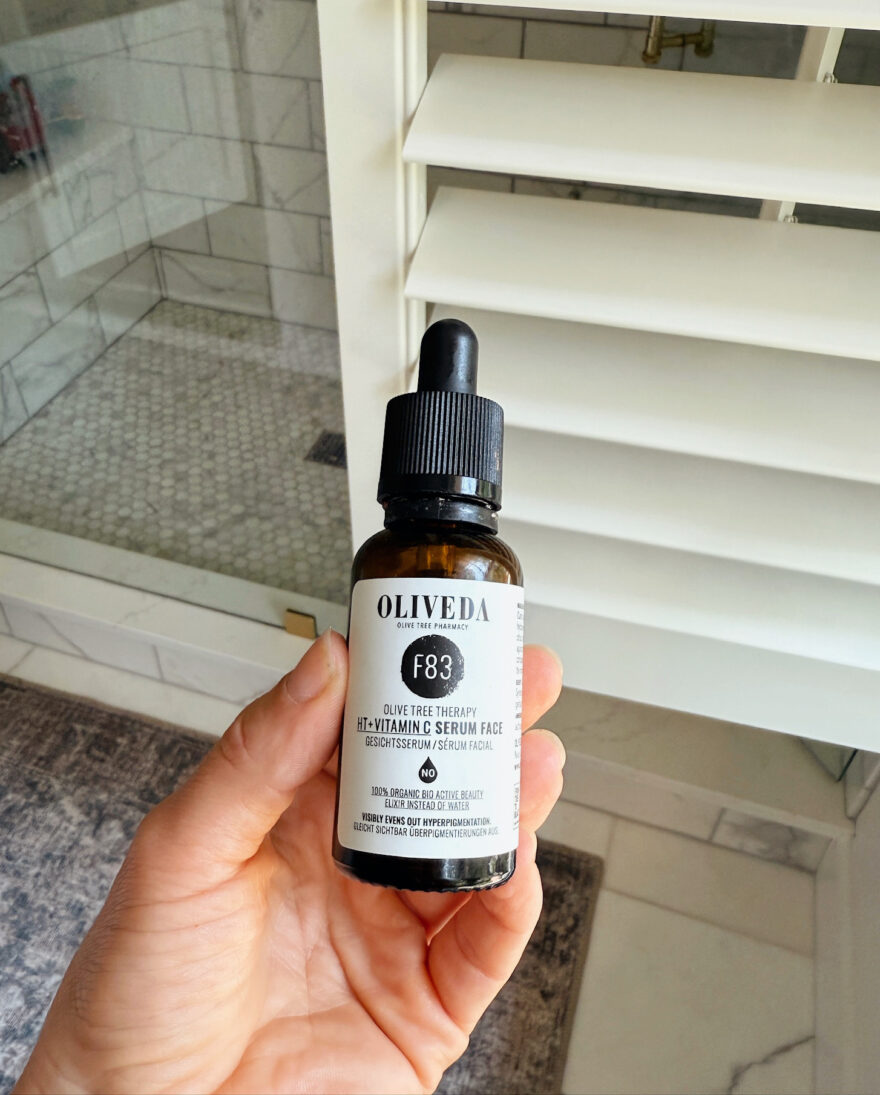

Eye creams are formulated specifically for the delicate skin around your eyes, which is thinner and more prone to fine lines, puffiness, and dark circles than the rest of your face. Because this area is so fragile, eye creams are typically made with targeted ingredients like peptides to firm, caffeine to reduce puffiness, and brightening agents to help with discoloration.
While you can technically use your face moisturizer under your eyes, a dedicated eye cream is lighter in texture, absorbs more easily, and addresses concerns unique to the eye area. Eye cream always goes before your moisturizer so it can penetrate without being blocked by heavier creams. Use your ring finger to gently tap around the eye area.
My Eye Creams
AM: OS-01 Topical Eye Supplement
PM: F64 Corrective Eye Elixir layered under OS-01 Eye Cream
F64 is an eye serum similar to F59 (aka Botox in a bottle) but specifically designed for the eye area. It can be used morning and night, but I’m generally in a hurry in the morning, so I use fewer products then.
Moisturizers are designed to hydrate and lock in water within the skin, usually with a combination of humectants (such as hyaluronic acid to attract water), emollients (to soften and smooth), and occlusives (to seal everything in). The biggest mistake I see in people’s skincare routine is using the wrong moisturizer for their skin type or skipping one altogether. (If you want a customized recommendation for your skin type, fill out this skincare questionnaire and I’ll email you back.)
My moisturizers

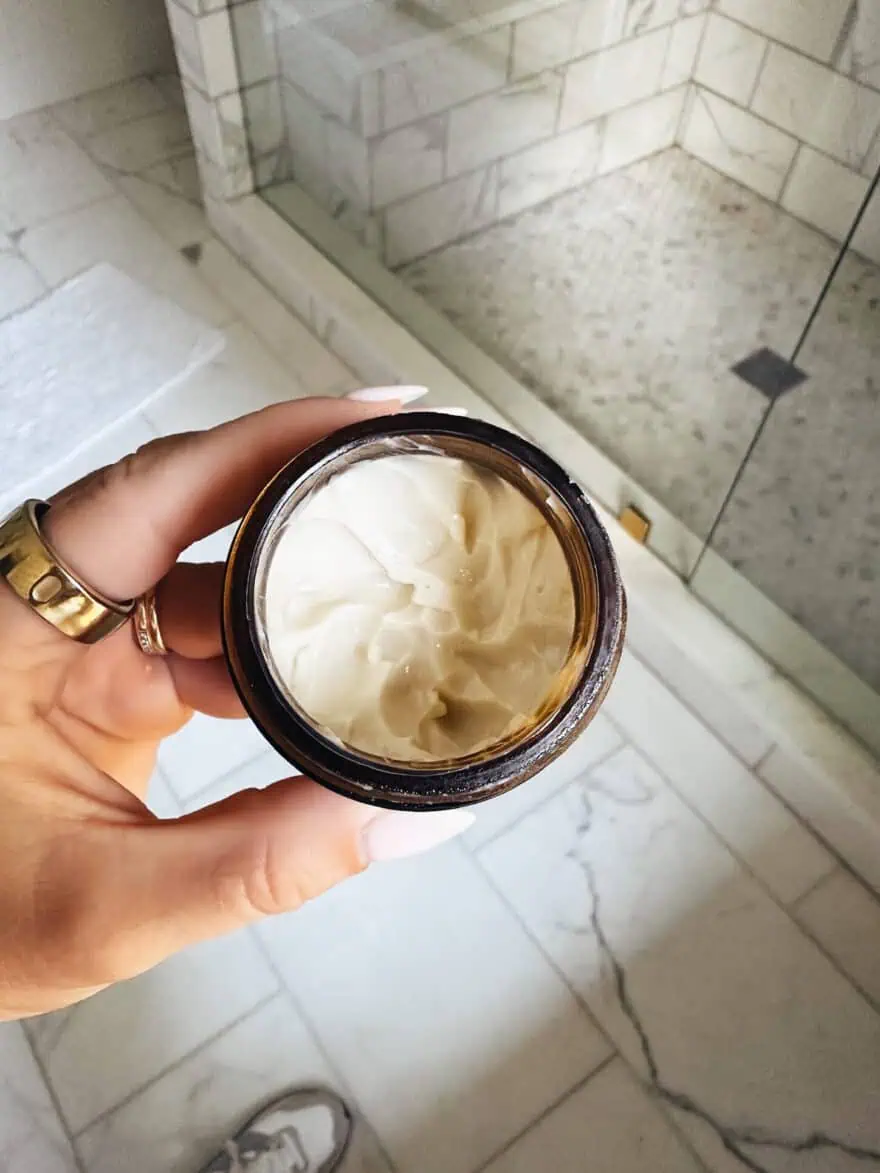
The skin on your neck is thinner, has fewer oil glands, and is often one of the first places to show signs of aging, like crepiness, fine lines, and sagging. While you can absolutely bring your regular moisturizer down your neck (and you should), dedicated neck creams are formulated with firming peptides, hydrating ingredients, and sometimes gentle exfoliants to address these concerns.
The biggest mistake people make is skipping the neck entirely (especially when it comes to SPF). I’ve always been good about bringing my skincare products down to my neck and chest… well, except my SPF (oops). And I only started using a dedicated neck cream about two months ago since it was definitely showing some age at nearly 41 years old. And I can’t believe the difference it’s made in such a short period of time.
Treat your neck as part of your face in your routine: cleanse, tone, and apply serums just as you would on your face, then apply your neck cream. Apply neck cream after moisturizing AM and PM.
My neck cream: U Beauty Neck + Décolleté Concentrate
A face oil, as its name implies, is purely oil-based—it can soften skin and create a barrier to prevent water loss, but it doesn’t actually add hydration the way that a moisturizer does. That’s why using only a face oil can leave skin dehydrated over time. The best approach is to apply moisturizer first to deliver hydration, then use a face oil as the last step to lock it in.
My face oil: Occasionally, I’ll use a face oil after F74 but only if my skin has been feeling rough, typically in the winter. My go-to is the Oliveda Jasmine Face Oil, but more of my favorites are listed in this post about face oils.
SPF is your last step in the morning, before makeup. Sunscreen protects against harmful UV rays, which cause premature aging, hyperpigmentation, and skin cancer. See all my favorite non-toxic sunscreens here, and my favorite tinted moisturizers (most with SPF) here.
Tips:
My favorite: OneSkin Face SPF 30+—lightweight, blends easily, and never pills under makeup. For a tinted option, I like the Barefaced tinted SPF.


Okay, to recap – here’s what I use! You can read more details about each of these in my comprehensive skincare routine post.
Morning:
Evening:
I hope this is helpful! Let me know if you have questions!


Leave a Comment